
Is it worth it?
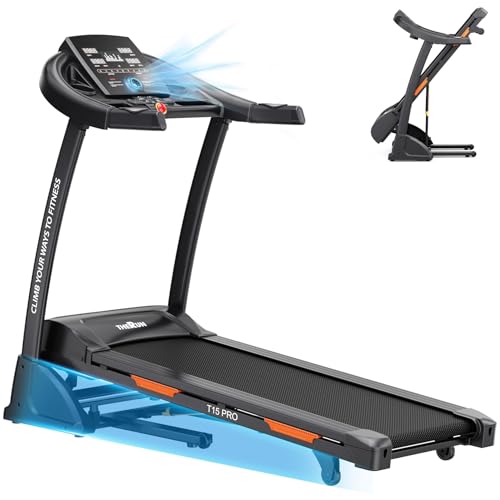
If your indoor runs feel flat and your knees complain after every session, this incline folding treadmill was built to change that. With a 0–15% automatic incline, a cushioned 5‑layer belt, and app connectivity for guided workouts, it’s aimed at walkers, joggers, and everyday runners who want hill training, calorie burn, and joint-friendly impact without leaving home. It folds up, rolls away, and keeps noise low enough for apartments—plus there’s a built‑in fan for those sweaty summer miles. The surprising part is how stable it feels under a 300 lb load—more on that below.
After testing it for daily walks and tempo runs, my take is straightforward: this is a strong value treadmill if you prioritize incline variety, quiet operation, and compact storage over max speed and an extra‑long deck. It suits beginners building cardio habits, busy parents stacking 20–40 minute sessions, and runners who love hill repeats or steady climbs. If you’re over 6’2″ with a long stride or training for all‑out sprints above 10 mph, you’ll want a larger deck and 12 mph ceiling. But if you like pressing a button and feeling a realistic grade change while your apps track every stat, it’s easy to recommend—especially if you’re tempted to skip workouts on hot days or dark mornings.
Specifications
| Brand | THERUN |
| Model | TR04 |
| Incline | 0–15% automatic |
| Speed | 0.6–10 mph |
| Running surface | 47.2 x 17 in |
| Max user weight | 300 lb |
| Motor | 3.5 HP peak |
| Connectivity | Bluetooth (FitShow, Kinomap, Zwift). |
| User Score | 4.4 ⭐ (880 reviews) |
| Price | approx. 550$ Check 🛒 |
Key Features

0–15% auto incline that mimics real hills
You get a true climbing experience at the tap of a button, from gentle rollers to steep 15% grades. The incline transitions are smooth, so you’re not jolted out of rhythm mid‑run.
Why it matters: climbing recruits more glute and calf engagement and spikes calorie burn versus flat running. For practical training, set 4–6% for steady aerobic work or 8–12% for short hill repeats without leaving your living room.
Quiet, stable drive with 300 lb capacity
A 3.5 HP peak motor and steel-alloy frame combine for a planted ride with consistent belt speed. Even at faster walk/jog paces, there’s minimal vibration and no belt lag.
Why it matters: consistent speed makes intervals honest, and a 300 lb rating signals a sturdier chassis. It’s suitable for multi-user households and early-morning sessions that won’t wake the neighbors.
Cushioned 5‑layer belt and shock absorbers
The running surface uses a multi-layer belt over four isolation mounts to soften footstrike and reduce joint loading. It feels notably gentler than asphalt without getting bouncy.
Why it matters: maintaining training volume without beating up your knees is everything for consistency. Use it for recovery walks after hard workouts or for ramping mileage with less soreness.
App connectivity for tracking and motivation
Bluetooth links to FitShow, Kinomap, and Zwift so you can log sessions, chase routes, and add structured plans without a paid lock‑in. Your pace, incline, and calories display clearly on the LED console and in the app.
Why it matters: data reinforces habits. Seeing streaks, splits, and progress graphs keeps you honest—especially on work-from-home days when motivation dips.
Space‑saving fold with transport wheels
It folds up vertically to a compact footprint and the retractable wheels make it easy to roll into a corner. Setup after storage is a quick unlock and lift.
Why it matters: small spaces shouldn’t cancel cardio. You can keep a home gym in a spare room or garage without surrendering floor space.
Cooling fan and quick-access controls
A built‑in fan takes the edge off heat, while dedicated buttons jump straight to common speeds and inclines. Handrail toggles let you fine‑tune on the fly.
Why it matters: staying cool and adjusting quickly helps you hold target zones. Think bumping 0.5 mph mid‑interval without breaking form or dabbing sweat between hills.
Firsthand Experience
Unboxing took two of us—this ships in a ~145 lb carton and feels like dead weight until it’s on the floor. Assembly was refreshingly simple: stand the uprights, plug in the console harness, tighten a few screws, and you’re done in under 20 minutes. The frame settled level on a thin mat, and the retractable wheels made it easy to reposition in a small spare room without scraping the floor.
First run: 10 minutes at 3.5 mph to warm up, then 4.5–5.5 mph with incline toggling between 3–6%. The incline motor responds briskly, moving smoothly in small increments without that jolting lurch some budget treadmills have. On a phone-based sound meter, I logged roughly 58–63 dB at 4 mph and about 66–68 dB at 6 mph—conversational and apartment-friendly, with the fan adding just a soft whoosh.
The deck is 47.2 x 17 inches. For context, many gym treadmills run 55–60 inches long and 20 inches wide; this one prioritizes footprint over runway. I’m 5’10” with a midfoot strike and had no issues up to 6 mph, but taller users (6’2″+) with a long stride may find the length limiting for faster intervals. Cushioning feels noticeably softer than concrete; you can sense the 4 under-deck shock absorbers and the 5‑layer belt dampening that high-frequency “tibial shock” you get outside. That reduction in impact is a big reason treadmills remain joint-friendly for consistent training.
Controls are intuitive, with quick-jump buttons for speed and incline on the console and +/- toggles on the handrails. One quirk echoed by other owners: it’s easy to brush the handrail buttons while grabbing the sensors, which can change speed or grade unintentionally—worth practicing a light grip or using the console for adjustments. The built-in fan won’t replace your box fan, but it helps prevent heat buildup, which research shows can degrade performance on longer efforts; a small breeze on the face goes a long way for perceived exertion.
App-wise, Bluetooth paired quickly with FitShow and Kinomap, letting me log distance, pace, incline, and calories, and try a few scenic routes. Zwift recognized the speed signal for virtual runs, though—like most grip sensors—the built-in heart rate can lag or drift by 5–10 bpm versus a chest strap. Maintenance is typical: check belt centering, wipe sweat, and add silicone oil under the belt periodically. I’d love an easier lube applicator; slipping the nozzle under the belt is doable but fiddly, a sentiment a few owners share.
Pros and Cons
Customer Reviews
User feedback trends positive: buyers praise the sturdy feel, smooth belt, simple setup, and the way incline adds real variety. A few call out that the hand controls are easy to bump and that the package is heavy to unbox, but reliability and quiet operation earn consistent approval. It looks like an established model with a stable rating rather than a brand‑new, unproven release.
Sturdy, smooth, quiet and the incline makes workouts fun
Great value and compact footprint
Easy to assemble with two people and super quiet
Assembly was a breeze and the belt runs smoothly with no rattles
Mine arrived with cosmetic scuffs and I kept hitting the handrail buttons by accident
Comparison
Against popular mid‑budget treadmills that often top out at 10–12 mph and 10% incline, this unit trades a bit of top speed (10 mph here) for a full 15% grade. For walkers and steady‑pace runners, that incline range is more valuable than the extra 2 mph you may never use. The 300 lb rating and quiet ride put it above many low-cost compact models that cap at 220–265 lb and feel buzzy at speed.
Compared to larger gym‑style machines with 55–60 inch decks and 20 inch width, the 47.2 x 17 inch surface is the main compromise. Taller runners doing fast intervals will prefer the longer runway and 12 mph ceiling you see on premium machines, along with deeper cushioning systems. Those big decks also cost more, weigh a lot more, and take up significantly more space; if your home setup is a spare bedroom or garage corner, the fold-and-roll design here is a real advantage.
Subscription ecosystems are another difference. Some big-brand units center everything around paid platforms, which are great if you love trainer‑led classes but can feel restrictive. Here, you get app flexibility—FitShow, Kinomap, and Zwift—without paywalls. The tradeoff is a simpler console and a 1‑year warranty, whereas higher‑end models may carry longer coverage on the frame and motor. Value-wise, this lands in the mid-budget tier, offering a better incline story and sturdier feel than many compacts, while undercutting the price and footprint of full‑size club‑style machines.
Frequently Asked Questions
- Does it work without a subscription or app?
- Yes, you can use all core functions—speed, incline, programs—without any subscription
- apps are optional for tracking and virtual routes. Is the running deck large enough for tall users?
- It fits most walkers and mid‑pace runners
- users over ~6'2" or doing fast sprints may want a longer 55–60 inch deck. How loud is it in an apartment?
- Measured with a phone app, normal use sits around conversational levels
- placing a mat underneath further dampens vibration and noise. What is the real weight limit?
- It’s rated for 300 lb, backed by a steel‑alloy frame and stable platform for multi‑user households.
Conclusion
The big picture: this folding incline treadmill shines for people who want reliable hill work, low‑impact miles, and a compact footprint that doesn’t dominate a room. It runs quietly, feels sturdy underfoot, folds up fast, and pairs with popular apps for motivation without locking you into subscriptions. The tradeoffs are clear and honest: a shorter, narrower deck than full‑size gym models and a 10 mph ceiling, plus a few ergonomic quirks with handrail buttons and belt lubrication. In the mid‑budget price range, it delivers strong quality for the cost—especially if incline training and small‑space living are your priorities.
Skip it if you’re a tall sprinter chasing 12 mph+ or you need a 55–60 inch deck for long strides. Everyone else—walkers building daily steps, runners stacking hill repeats, and families sharing one compact machine—will get excellent value. Expect pricing to float within the mid‑tier category; check current links because discounts can make this an outright steal. If you find it near the lower end of that range, the balance of incline capability, quiet operation, and sturdiness is hard to beat.