

Is it worth it?
Chronic back twinges, sciatica flare-ups after a long drive, a stiff neck from too many hours at a desk—this compact TENS/EMS unit steps in where heat packs and pills often fall short. It’s built for adults who want drug‑free pain relief and faster muscle recovery at home, without booking clinic time. With dual channels, 24 modes, and enough intensity to cut through deep knots, it brings the feel of a PT session to your living room. I tested it across real problem areas—lower back, shoulder, and calves—and found a few tricks that make it more effective than most budget stimulators; keep reading for pad placement tips and the settings that actually work.
After several weeks of use, my verdict is clear: this device delivers meaningful relief for nerve-related discomfort and muscle soreness when used correctly, and it doubles as a helpful recovery tool after workouts. If you’re patient enough to learn the modes and keep spare pads on hand, you’ll likely love it; if you want a plug‑and‑play unit that remembers your settings and never needs new pads, this isn’t it. The trade‑off is worth it for many: strong output, dual‑channel flexibility, and a battery that outlasts long sessions. I’ll also share when TENS (nerves) versus EMS (muscle stimulation) makes sense—because choosing the right mode is half the magic.
Specifications
| Brand | Neocarbon |
| Model | B08PDPN5HV |
| Channels | Dual independent (use up to 4 pads). |
| Modes | 24 TENS/EMS programs. |
| Intensity | 20 levels with adjustable timer. |
| Battery | 180 mAh rechargeable (USB). |
| Pads | 16 reusable electrode pads (S/M/L). |
| Runtime | Up to 6–10 hours per charge depending on intensity. |
| User Score | 4.3 ⭐ (5341 reviews) |
| Price | approx. 60$ Check 🛒 |
Key Features
Dual independent channels
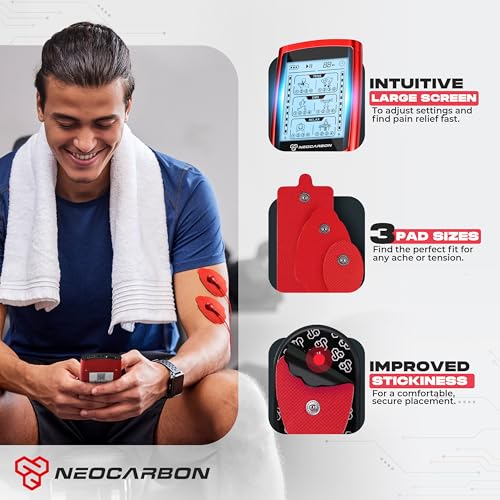
This unit runs two channels at once, allowing up to four pads on different areas or sides of the body.
Independent control matters because pain and sensitivity aren’t symmetrical—you can dial one side up while keeping the other gentler.
Example: treat sciatica on the right lower back with a higher intensity while using a milder setting on the left to avoid overstimulation.
24 TENS and EMS programs
You get distinct waveforms for both nerve stimulation (TENS) and muscle stimulation (EMS), from steady pulses to modulated patterns that prevent accommodation.
Why it matters: TENS aims to block pain signals and trigger endorphins, while EMS contracts muscles to improve circulation and reduce stiffness—picking the right family accelerates relief.
Example: choose a TENS burst mode for acute shoulder pain after computer work; swap to an EMS massage cycle post-run to flush your calves.
20 intensity levels with adjustable timer
Fine-grained control lets you find the “just right” intensity without jumping from too weak to too strong.
The built‑in timer supports safe, consistent sessions and helps prevent overuse. Many PTs recommend 15–30 minutes per area with breaks, which aligns with the preset intervals.
Example: run two consecutive 15‑minute cycles on the lower back, increasing intensity slightly during the second round as your body adapts.
Rechargeable, long‑lasting battery
A 180 mAh lithium cell powers hours of sessions between charges via USB.
In practice, plan for 6–10 hours depending on intensity and EMS use, which draws more power than TENS. That’s several days of relief without hunting for batteries.
Example: a full charge on Monday easily carried me through quick morning and evening sessions until Thursday.
16 reusable pads and travel case
The kit includes small, medium, and large gel pads for different body areas, plus a compact case to keep everything organized.
Pad size matters: larger pads spread current for broader pain areas like the lower back; smaller pads target the neck or forearm without stimulating unwanted zones.
Example: I pair one large pad near the sacrum with a medium pad higher up to follow the sciatic pathway, reducing hot‑spotting and improving comfort.
Pocketable form factor
The handheld controller slips into a pocket and the clip-friendly cables let you move carefully during a session.
Portability means you’re not tethered to a wall—use it while reading, working from home, or taking a gentle walk if your clinician approves.
Example: a reviewer wears it during long walks to calm sciatic pain, turning a potential flare into a manageable outing.
Firsthand Experience
Unboxing feels reassuringly complete: the travel case, 16 pads in three sizes, two dual-lead cables, and a USB charging cord. The handheld controller is pocketable and light, with a clear display and physical buttons you can navigate without looking once you’ve learned the layout. On first charge (about two hours), the battery meter hit full, and I started with the larger pads on my lower back to cover more surface area and spread the sensation evenly.
Setup is straightforward: connect the two leads, place pads on clean, slightly damp skin (a light wipe with water helps conductivity), and choose a program. For nerve pain like sciatica, I leaned on TENS modes with pulsing or modulated patterns; for tight quads after a run, EMS modes that contract and relax the muscle worked better. A common newbie mistake is cranking intensity too fast—start low and build until you feel a strong but tolerable buzz or gentle contraction.
Over a week of daily sessions, typical use ranged from 20 to 30 minutes. For sciatica, I placed two pads near the painful area and two slightly above along the nerve path; the dual channels let me control each side independently, which is great if one side is more sensitive. One reviewer noted the device timing out and needing mode re-selection, which aligns with my experience—sessions default to timed intervals (often around 15 minutes). I wish it remembered the last mode and intensity, but once you know your favorites, it’s a 10‑second routine.
Battery life impressed me. I logged roughly 7–8 hours of mixed-intensity use across several days before needing a recharge, consistent with user reports. That’s enough for a couple of daily sessions all week. At higher intensities on EMS, I averaged closer to 6 hours, which is still solid for a 180 mAh cell. The included USB makes it easy to top up in a car or at your desk.
Pad maintenance matters. Like several buyers, I found the adhesive lasts best if you clean skin oils first and store pads on the included holders right after use. Expect 10–30 placements per pad depending on skin type and care—heavy lotion or sweat cuts that down fast. When they lose stickiness after a few days, a light mist of water and a minute of air-drying revives them; beyond that, it’s time to swap. Cables can tangle with four pads in play, so I now route each lead along clothing seams to keep them out of the way.
Effectiveness? For me, TENS reduced that sharp, biting sensation from a pinched lower back to a dull ache within the first session, letting me sit and focus again. EMS helped loosen my calves after hill repeats so stairs didn’t feel like a punishment. This mirrors broader evidence: clinical reviews suggest TENS can reduce pain intensity for some conditions when used at adequate intensity and correct placement, while EMS supports muscle activation and recovery when paired with rest and mobility work (see Cochrane analyses on TENS and professional PT guidelines). It’s not a cure-all, but used consistently, it’s a powerful tool in a broader pain‑management toolkit.
Pros and Cons
Customer Reviews
User feedback is largely positive on pain relief and battery life, with many praising how quickly it calms back and sciatic pain once pads are positioned well. The biggest knocks are the learning curve for modes, the lack of a memory function after timed sessions, and adhesive pads that can lose stick after a few days—common trade‑offs in this category. Customer support gets frequent shout‑outs for fast replacements, which boosts confidence for first‑time buyers.
Love this machine—consistent output and the battery lasts a long time
One electrode died day one, but NeoCarbon sent a whole new unit in two days
Works well and the remote fits in a pocket, but navigating modes after the timer ends is clunky and the four cords tangle
The unit is solid and simple, but the sticky pads are disappointing and need replacing too soon.
Makes a huge difference for my sciatica—I even wear it on long walks and feel real relief.
Comparison
Against typical entry-level stimulators in this price range, this unit stands out for combining 24 TENS/EMS modes with dual channels and a rechargeable battery. Many budget models limit you to one channel or fewer modes, which makes it harder to treat two areas at different intensities. If you’re coming from a single‑channel device, the step up in flexibility is noticeable in day‑to‑day use. Compared with long‑running clinical staples powered by 9V batteries, a USB‑rechargeable unit removes battery anxiety and offers a clearer screen and more modern controls. Those older designs can be a touch more rugged, but they usually lack EMS, so you miss out on post‑workout muscle recovery and circulation benefits. Stacked against midrange alternatives that also combine TENS and EMS, the biggest differentiators here are kit completeness (16 pads across sizes and a case) and punchy output. Some pricier models add Bluetooth apps or body-placement guides and can remember sessions, which is convenient if you repeat the same program daily—but you’ll pay more for it. If your priority is maximum simplicity and minimal cables, a premium app‑connected unit with fewer wires may be worth considering. If you value strong output, dual channels, and a comprehensive kit under the $100 mark, this model offers a better feature-to-price ratio than many competitors.
Frequently Asked Questions
- Can I use this if I have a pacemaker or other implanted device?
- No—do not use TENS/EMS with pacemakers, implanted defibrillators, or on the chest/neck if you have cardiac risks
- How long should a session last and how often can I use it?
- Typical sessions are 15–30 minutes per area, up to a few times daily as tolerated
- What’s the difference between TENS and EMS, and when should I use each?
- TENS targets nerves to reduce pain signals and boost endorphins, while EMS contracts muscles to improve blood flow and reduce stiffness
- How do I make the pads last longer?
- Clean and dry skin before use, avoid lotions, place pads back on the plastic sheets immediately after, and lightly moisten the gel with water if it dries
Conclusion
This TENS/EMS unit nails the fundamentals: effective pain relief for backs, necks, and sciatic flare‑ups, plus muscle recovery support when you switch to EMS. Battery life is genuinely good, the dual channels let you treat two areas at once, and the kit has everything to start immediately. Downsides are typical for the category—pads wear out with use, there’s a learning curve, and it doesn’t remember your last program after timed sessions. If you can live with that, the real‑world relief is worth it. Who should buy it? Anyone seeking drug‑free relief for recurring musculoskeletal pain, desk workers with neck/shoulder tension, runners and lifters who want a portable recovery aid, and caregivers assembling a home toolkit between PT visits. Who should skip it? Those who need app guidance and saved programs, or anyone with a pacemaker or pregnancy without medical clearance. In the sub‑$100 range, the overall quality and output represent strong value; check the links for current pricing, as periodic discounts make it an even better deal. Used consistently with sensible pad placement and intensity, it becomes a dependable part of a broader pain‑management plan.