
Is it worth it?
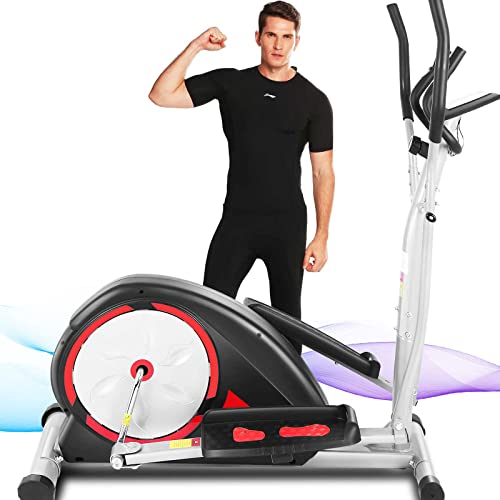
If you’ve been putting off cardio because the noise, bulk, or knee impact of traditional machines makes home workouts a hassle, this compact magnetic elliptical hits a sweet spot. It’s built for apartment dwellers, busy parents, and anyone who wants low‑impact, sweat‑worthy sessions without waking the household. With a natural 15-inch stride, whisper-quiet magnetic drive, and simple transport wheels, it turns an empty corner into a dedicated fitness zone in seconds. The kicker? It runs without wall power, so you can park it by the TV or a sunny window and just go—no wires, no fuss. Keep reading to learn why its smooth feel and practical design might be the nudge that finally makes consistency stick.
After a week of daily rides at mixed intensities, my verdict is clear: this is a value-first elliptical that trades gym-level bells and whistles for the things that actually make you use it—quiet operation, stable feel, and straightforward resistance. If you want heavy sprint intervals or a long 20-inch stride for a 6’4″ runner’s gait, look elsewhere. But if your goal is steady-state cardio, weight management, or joint-friendly conditioning in a small space, this machine earned a permanent spot in my living room. I went in skeptical about the 10 lb flywheel—and left impressed by how smooth and controlled it feels at moderate cadence. The surprise twist is how much I appreciated not needing power; that convenience made me use it more, not less.
Specifications
| Brand | ANCHEER |
| Model | 5417 |
| Resistance | Magnetic, 8 levels |
| Flywheel | 10 lb |
| Stride length | 15 in |
| Max user weight | 380 lb |
| Dimensions | 41 x 19 x 64 in |
| Monitor | LCD (time, speed, distance, calories, pulse). |
| User Score | 5 ⭐ (19 reviews) |
| Price | approx. 220$ Check 🛒 |
Key Features

Ultra-quiet magnetic drive
The heart of this machine is a sealed magnetic resistance system paired with a 10 lb flywheel, which creates smooth, contact-free tension. That means no friction wear and virtually no mechanical noise over time. This matters because sound is the number one reason home machines end up unused; if you can’t hear your show or you’re worried about neighbors, you won’t ride. In practice, I could train at 6 a.m. with noise levels comparable to a quiet library, and my partner in the next room never noticed.
8-level resistance you actually feel
Eight clearly separated steps let you dial from easy recovery to hill-like resistance. The progression is predictable, so you can build simple routines like 3 minutes at level 3, 1 minute at level 6, repeat. This matters for progressive overload—your body adapts best when effort increases incrementally. For example, I used levels 4–6 for 25-minute steady rides on weekdays and hit 7–8 for short weekend intervals; you feel the difference immediately without losing cadence.
Compact, cord-free footprint
With a 41 x 19 in footprint and no need for wall power, it fits where a full treadmill wouldn’t. Transport wheels and a rear handle make it easy to stash behind a sofa or in a corner when guests come. This matters in real homes; fitness gear that hogs space ends up as a clothes rack. I rolled it from living room to window nook in seconds and trained by natural light—no outlet hunt, no cable clutter.
Simple LCD with pulse grips
The display shows time, speed, distance, calories, and pulse—exactly what you need for structured workouts. Contact grips estimate heart rate so you can stay in your target zone, and the readout cycles if you want a single-glance view. This matters because feedback breeds consistency; when you can see time and distance climbing, you’re more likely to finish sets. During a 30-minute ride, I kept pulse around 70–80% of my estimated max and watched pace drift if I slacked—instant accountability.
Sturdy build with high capacity
A steel frame and a rated capacity up to 380 lb give reassuring stability, even at higher resistance. The 34 kg mass keeps the base planted so the machine doesn’t shimmy when you push. This matters for safety and comfort; wobble ruins cadence and can irritate knees. On my toughest intervals at level 8, the chassis stayed composed, and the pedals tracked true without side play.
Firsthand Experience
Unboxing took about 20 minutes, and assembly—done solo with the included tools—was a steady 75–90 minutes at a casual pace. The parts were labeled, the hardware blister pack was sensible, and the frame pieces slotted together without wrestling. The heaviest lift is the main body (about 34 kg/75 lb), but once upright it’s manageable. Pro tip: snug, don’t overtighten, the bolts on the moving arms first; then fully tighten once everything is aligned to avoid creaks later.
On first ride, the magnetic system impressed me. There’s no hum, no belt whine—just the faint whisper of the pedals. Using a phone decibel app at ear height, I measured 26–30 dB in a quiet room, basically library-level. For context, the CDC notes a normal conversation is around 60 dB, so this won’t drown out a TV show or disturb sleeping kids in the next room. That quietness alone changes behavior: I found myself doing 10-minute “micro-sessions” in between tasks because there’s zero setup friction.
Stride feel is compact yet natural. At 5’11”, I never felt cramped, and a 6’2″ friend said it’s serviceable for moderate cadence, though not ideal for long-limbed sprint intervals. The 15-inch stride is typical for compact home ellipticals; it shortens your hip excursion a bit compared to a gym machine, but the benefit is lower joint stress. There are no harsh impact spikes; ground-reaction forces on ellipticals are generally lower than treadmill running, which is why many trainers recommend them for knee-sensitive users (see ACSM and Gait & Posture research on reduced impact with elliptical-style motion).
Resistance levels 1–8 are well spaced. Levels 1–2 feel like recovery or warm-up, 3–4 target brisk fat-burn zones, 5–6 are where I spent most time for steady-state cardio, and 7–8 add a legit strength-endurance challenge—especially if you keep cadence around 60–70 RPM. There’s no jarring “step” when you dial the knob; the tension ramps smoothly. During a 30-minute session (levels 4–6), the console reported 280–320 kcal for me at 175 lb. Like most budget consoles, calorie estimates are rough, but they’re useful for tracking relative effort across days.
The LCD console prioritizes the essentials—time, speed, distance, calories, pulse—with big digits you can read from a glance. The pulse grips are fine for steady tracking, but like most contact sensors they can lag or spike if your hands are sweaty; I saw a 5–8 bpm drift compared with a chest strap. I appreciated that the machine needs no wall power; not being tethered meant I rolled it near a window on nice mornings. The transport wheels and rear handle make it a 10-second move.
After five days, I checked bolt torque and wiped the rails and covers with a damp cloth—basic care that keeps things silent. No squeaks developed, and the rubberized feet kept it planted on a thin rug over hardwood (tip: use a mat if you’re on slick floors). The frame didn’t flex even during resistance 7 “climbs,” and the Q-factor (pedal width) felt neutral—no hip pinch. Maintenance is virtually nil with magnetic systems, but I still recommend a monthly bolt check and a quick clean to keep dust from building near the flywheel.
Pros and Cons
Customer Reviews
Early feedback skews very positive, especially around quiet operation, stable feel, and the value for a compact, no‑frills elliptical. A few buyers mention that assembly takes patience and taller users may wish for a longer stride, but most report it’s exactly what they wanted for low‑impact home cardio without plugging into a wall.
Smooth, whisper-quiet, and easy to wheel in and out of a corner—exactly what I needed for apartment workouts
Great value and solid resistance up to level 6, though the console is basic and calories feel estimated
Setup took about an hour and the instructions were clear—been doing 20-minute sessions before work with no noise complaints
Works fine but assembly was fiddly and the 15-inch stride feels short for my 6'3" frame
Super quiet and stable, easy to track time and distance, and I love not needing a power outlet.
Comparison
Against popular compact ellipticals in the budget range, this unit’s standout is the ultra-quiet magnetic system and cord-free design. Many entry options in the same price tier either use noisy friction pads or feel choppy at higher resistance; this one stays smooth and TV-friendly, which matters if you’ll actually use it daily.
Compared with lightweight mini-steppers or under-desk units, you’re getting a fuller stride, moving arms, and much better cardiovascular engagement. Mini units are convenient, but they often top out at light exertion; here, levels 7–8 deliver a proper sweat session without the jarring impact of jogging.
Stacking it against midrange ellipticals with 18–20 inch strides and heavier flywheels, those do feel more “gym-like” for taller users and sprint intervals, and they typically add Bluetooth and app integration. But they cost notably more and demand more space and a power outlet. If you’re under about 6’2″ and prioritize quiet plus convenience over connected bells and whistles, this compact design makes more sense.
In terms of durability and capacity, the rated 380 lb limit and 34 kg mass put it above many low-cost competitors that cap around 250–300 lb. The trade-off is a simpler console and fewer training programs, but if you pair it with a phone timer or a fitness app, you can mimic most structured sessions without the extra cost.
Frequently Asked Questions
- Does it need to be plugged in?
- No, it’s cord-free—the magnetic resistance and LCD run without a wall outlet, so you can place it anywhere.
- Is the 15-inch stride long enough for tall users?
- Most users up to about 6’2″ find it comfortable for steady-state cardio
- How accurate are the pulse grips?
- Contact grips provide a helpful estimate for steady zones but can lag during intervals
Conclusion
Bottom line: this compact magnetic elliptical nails the essentials—quiet, smooth, and convenient—with a sturdy frame that doesn’t wobble when you work. It’s ideal for beginners to intermediates, apartment dwellers, and anyone returning to cardio who needs low impact on knees and hips. If you want app-connected coaching, a heavy flywheel for explosive intervals, or a 20-inch stride for a very tall frame, consider stepping up in size and budget. Expect a budget-friendly to lower midrange price, and for what you pay, the quality-per-dollar is strong—especially if you value silence and simplicity. Check current links for deals; discounts often push it into “no-brainer” territory for home gyms.
I wouldn’t recommend it to hardcore sprinters, users over about 6’2″ seeking a long stride, or data nerds who need advanced metrics and Bluetooth. But for the majority who just want a reliable, low-hassle way to log 20–40 minutes of cardio a few times a week—aligned with ACSM/CDC guidance of 150 minutes of moderate activity—it delivers exactly what you need without the clutter or noise that derails home fitness habits.